Tuesday, 27 January 2015

Photographic Referencing for Animal Artists


Let's face it, animals don't stay still at the best of times and wildlife much more so than our domestic pets. So in order to create detailed paintings I find it necessary to rely on photographic references. 

These allow us to create accurate paintings that would be much harder or impossible to create by relying on memory or by painting from life. Wildlife tends to be especially tricky by being elusive and staying some distance away as well as generally not staying still. In many cases it is also simply far too difficult and expensive to be able to see animals in there natural habitats such as say wild lions in Africa or Bison in Yellowstone. Thankfully there are a few options that still allow us to get the references we need for wildlife painting.


DO IT YOURSELF

The best option is always to rely on your own photographs. For wildlife photographs taken on wildlife holidays or accidental encounters during vacations give the best opportunity. But photographs can also be taken closer to home by visiting local zoos and wildlife parks and taking pictures of wildlife native to your patch. In such cases wildlife will often still be at some distance so make sure you have a camera with a decent optical zoom. A tripod or your camera's image-stabilization can help avoid blurred pictures. Also make sure you research the best time to visit such as feeding times or keeper talks for wildlife. Be aware of crowds that come with summer school holidays where zoos may become too busy to get a good photo in some cases. The weather and season is also going to affect levels of activity as well as any animals that go through seasonal moults.


Keeper interaction and young animals make for great photographic opportunities

Another option is to photograph museum taxidermy exhibits. These can also be used for sketching practise. Remember that you might want some plant or vista references to act as elements in the foreground and background of your artwork so photograph these elements too.


FREE ARTIST PHOTOGRAPHS

Thankfully there are a few free resources that are accessible and free for artists to use. Why is this important? Because every photograph is subject to copyright and by just copying any photograph you see you are infringing copyright. Not a big deal for small sketches but much more significant if you are intending to sell your artwork where you run the real risk of fines. Some free resources still require you to attribute the reference you used and you should always make sure to read through the terms of use. Also be aware that some people may post our people's work into some stock resources which are very likely done without consent are still subject to copyright. The most important element of these is that they are allowed to be used for commercial use.

WetCanvas's Reference Image Library (RiL) is one of the best known. WetCanvas is an online art group and the RiL is a shared resource of photographs from its members and only available for use among its membership. 

Other free photographic resources that I'm aware of are MorgueFile, PaintMyPhoto, and FontPlay. DeviantArt also have a section where people put up photographs for stock use but this needs to be checked to confirm what usage is permitted and what attribution is required.

These resources often give you access to broad range of animals that you may otherwise be unable or unlikely to see. Photographs are given willingly and I find it good practise to comment and let the photographer know if you have used their work and where they can see it. I think it's also good practise that if you use such a resource that you help contribute to it.


PHOTOGRAPH STOCK SITES

Usually still advertising as 'Free' (though meaning royalty-free) these sites such as Shutterstock, iStock, Fotolia, or one of the many others provide a massive resource of images that you can pay a license for. Images cost a few £s or $s each which may vary with the image as well as the image's dimensions. Also be aware of licensing restrictions for the images use. There's also one dedicated wildlife reference photo site that I have heard for aimed towards artists called Wildlife Reference Photos
which charges about $5 a photo. 


There are a couple of disadvantages of using stock photographs of both free and paid for photographs. One is that they may be used by other artists so be aware that art very similar to yours may be created, especially if you work straight from the reference with little alteration. Also be aware that using such photos can disqualify you from some art competitions and shows. Other options are to contact a photographer personally or use photographs of people you know. 

Personally, I currently use a mixture of free artist stock photographs and my own photographs. I tend to now work more from ideas now than specific photographs and use a selection to help me create more accurate paintings that usually end up quite different from any one photograph. Even paintings that are largely from one reference typically have some alteration to them such as this red panda portrait.

Saturday, 17 January 2015

Putting a price on nature?

Towards the end of last year I caught an interesting debate on the radio discussing how to value the natural world and what price we should put on it.. or indeed should we even be doing so in the first place?
(You can listen to it on the BBC's website here. Debate starts at 11:00 minutes.)


Two knowledgeable experts were on discussing the issue; one a writer and environmental consultant, the other an environmental economist. Both had impassioned and differing views of what would be required to address the state of our biosphere - currently in poor shape with levels of extinction so high many scientists agree that we are in a mass extinction event (known as the Holocene extinction event or Sixth Extinction).

So, should we put a price on it? Here are the general arguments:

#FOR
The arguments for putting a price on nature stems from the fact that so much of our world is seen in financial terms by governments and economists and the only way to make visible what we are losing is to express it financially. That way taxes, subsidies, and laws can be built around it in order to protect it. It is also the case that many people are not well-informed or indeed prepared to vote for more radical alternatives. In a democracy these are not vote-winners so we need to work with what we can.

#AGAINST
The counter to this was that pricing nature is a near impossible thing to do and would depend greatly on who was doing it and how? Ecosystem relationships are a complex web of inter-connectivity providing materials, food, medicine, tourism, and ecosystem services such as water purification that make it hard to pin down and value. Putting a price on natural does not address the growth problem which has led much of the environmental loss that has occurred and could simply act as a way to 'market' nature such as what has happened with climate change and the carbon market where credits are traded and offset; making profit for speculators and polluters but simply not addressing the problem. As such a more radical rethink of how our society's success and wealth is calculated is needed and that chasing GDP now was bringing us little in terms of better lives and happiness and furthermore it was unable to value such things. 


It was an interesting debate and one I'd like to add a couple of thoughts to:

Seeing as how so much of our economy and lives is depended on the natural world (its products and services) it is surprising to me how little it is thought of. Here's a vague list of ecosystem services the natural world provides us for example:

  • Food
  • Medicine
  • Raw Materials
  • Fuel
  • Tourism
  • Recreation
  • New Technologies
  • Carbon cycle and storage
  • Nitrogen cycle
  • Soil formation
  • Water cycle
  • Water and air purification
  • Flood regulation
  • Oxygen production
  • Pollination of crops
  • Decomposition of waste
  • Pest and disease control
  • Genetic diversity
  • Energy production
  • Seed dispersal

Valuing this and more would certainly be a tall order and how would you take into account potential unknown discoveries or value a failing keystone species? What about a capacity to recover? Even a single food source can rely on a complex ecosystem arrangement. Take the Brazil nut for example: 

Brazil nut trees rely on pristine forests; attempts have been made to grow the trees in orchards but with little succes. Here in the rainforest the tree's bee pollinators live, which in turn depend on orchids that grow in the forest canopy.  Male bees use the orchid's pollen as attracting scents to entice female bees, meaning many of the orchids have species-specific pollinators. Once the nuts  of the Brazil nut tree are ripe they fall to the forest floor. Here the agouti, a large rodent, has the teeth strong enough to break through the thick hard shell. For food storage it buries some of the seeds, some of which are inevitably forgotten thus playing an important role in the germination of Brazil nut trees.

In regards to working within the current system it seems that often this generates slow or little progress - global warming springs to mind, as does stewardship schemes. These were introduced in the UK to persuade farmers to take up more wildlife-friendly measures by negating their financial costs. These came into effect due to large population declines observed in farmland-associated species, particularly birds, and were brought in to reverse the declines. There has been around a 60% take up of the basic form of stewardship (ELS) but the declines haven't been reversed or even stopped but only slowed.

It's because of this that I do think big changes are necessary along with a radical rethink to improve the situation. But at the same time I can appreciate that by valuing nature in monetary terms is perhaps the most realistic option in what is a stubborn status quo. History has shown us that it has been mainly through large upsets and catastrophes that we have adjusted the course of our progress.

My foundation argument when it comes down to it falls back to 'If we don't do anything, ultimately, it will be us who will eventually suffer the consequences of broken ecosystems'. Through over-consumption, pollution, habitat removal, climate change, et cetera we have lead to the extinction and the future extinctions of many species. By doing this to such inter-connected ecosystems on which we rely we are effectively sawing the branch we are sitting on.

I don't like to use this argument though. I'd rather argue the more romantic notion that something can exist for its own sake rather than based on how useful it is to us. But sadly I don't think that will work. Maybe I'm wrong though. I hope I am.

Friday, 9 January 2015

Pet Breed Focus: The Beagle


I thought that for around once a month I would do a focus on a particular pet breed - mainly cats and dogs but I'm open to looking at more unusual pets. Where I will produce some artwork as well as give a little info about the breed.

This month it's the beagle.


Size: Small to medium
Origin: Modern breed originates from Great Britain around the 1830s
Appearance: Long rounded ears, long tail with a white tip that's held upright. Medium length smooth coat that's usually tricolour (white, tan, and black)

History/usage: The beagle has a fantastic sense of smell and has been breed to be determined and often single-minded in order to track game such as hares and rabbits. It's sense of smell has also been utilised in airports where beagles are used as detection dogs looking for items such as food and drugs - they are even used to find signs of termites in Australia. They are also used in pet therapy and, more controversially, are the most common dog, by far, used in animal testing.


Tuesday, 30 December 2014

The Osprey

For my latest painting I decided to paint a bird of prey - the osprey. And, to make it more challenging, I wanted to portray it in a more active and dramatic scene where it was fishing. I hope you like it!


With wildlife I try and make sure the animal I am painting is identifiable as a species. For this, as well as using what I can see, I also utilise ID guides in this case my trusty Collin's Bird Guide.


The osprey is one of the most widely distributed birds on Earth; spanning every continent except for Antarctica. In the UK it occured widely in the past but was persecuted as it competed with people for fish. The increasing pressure from firearms usage in the 19th century saw the osprey as well as the sea eagle pushed in extinction in the UK by 1916. In its final years, as it became rarer, the osprey became the target of trophy hunters and egg thieves. In England the last breeding pair was likely in Somerset in 1847. In wilder Scotland the population clung on longer, retreating into the Highlands where the last known pair nested at Loch Loyne in 1916. 

It was in 1954 at Loch Garten, Speyside, when a Scandinavian pair of ospreys was found to have recolonised Scotland and were breeding and the population has slowly climbed from there. As the population was slow to colonise opsreys were reintroduced to England at Rutland water in 1996. Later a pair bred in Kielder Forest in 2009 - the first to do so for over 200 years. Today the osprey population has reached a modest 200-250 breeding pairs. Sadly most breeding sites have to be kept secret as well as guarded to protect from would-be egg thieves and hunting - egg collectors have stolen over 100 clutches of eggs since the 1950s.
The painting in progress:


Monday, 15 December 2014

Oil Painting for Beginners

So this week I thought I'd tell you the basics of what you need to know to start oil painting. From what tools and materials you will need to how to go about creating your painting. I've probably missed a couple of things out but I've certainly picked up some useful information through art college, art books, and experience that I can share with you.

I'm not going to be telling you HOW exactly you should paint. People want to paint different subjects in different ways and developing your own style is something that comes from practise and experience. This is intended to be a handy guide for anyone looking to take up oils.

So let's begin!

What you'll need:


  • A paint surface

Typically this is cotton or linen canvas but you can also work on wooden boards including MDF and hardboard. You can even paint on paper to a degree.

Canvas comes in various levels of coarseness. Some artists like roughly woven canvases to feed into the texture of their work whilst others prefer finer canvasses to allow small details to show through. You can buy canvasses already set on a frame or loose canvas which you can frame yourself. Framed canvasses come in both primed and unprimed states. Priming a canvas is important as the oils will absorb into the canvas which over time may lead to rotting. If you buy an unprimed canvas you will want to coat it in a few layers of acrylic gesso to create a good surface to paint on. Sand it down to create a finer surface.

When buying canvas check to make sure it has a smooth surface for you to paint on. Look out for any rips, dents or bubbles.

It's best to prime boards too to create a better surface to put paint on. You can paint on paper but as this is such a thin material it is even less durable and is best for sketches and studies rather than larger projects (ideally prime too). Be careful of the paper warping due to moisture. Oils can seep through paper relatively quickly.

The surface you paint on will affect drying time along with the thickness of paint and the mediums you use. I personally find that hardboard takes longer to dry than canvas.
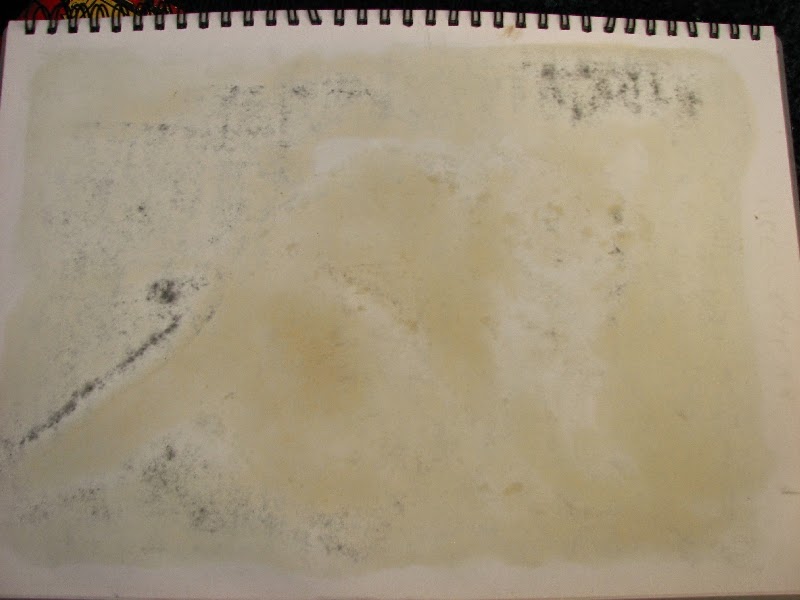
Oils coming through the paper


  • Brushes

Technically you don't have to apply paint with a brush you can try out anything you want - plastic cards, fingers, sticks, but most artists use brushes to create accurate mark-making.

I recommend buying a wide selection in brush sizes. Use broad brushes to paint large areas and to apply gesso, and finer pointed brushes to work on small details. You don't want to be covering a massive canvas using a tiny brush - it will wear it out plus take forever! Brushes come in natural hair as well as synthetic. You can also use a palette knife to mix colours and apply paint thickly onto the paint surface. 

Make sure to thoroughly clean your brushes when you have finished a painting session with lots of soap, particularly for synethic brushes to prevent damage. The lifetime of brushes varies between artists and depend on their size. Some artists will get through small brushes in one painting, others can make them last a few months. You'll know when they need changing as the hairs will splay making mark-making difficult.


  • Paints 

:
There are broadly two ranges of paints to choose from:

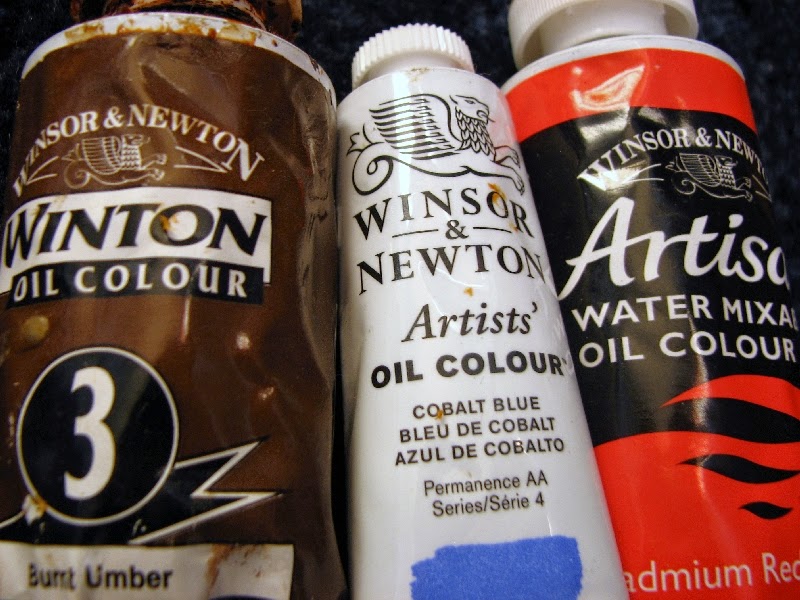
Student paints: such as Winton, are cheaper paints as they contain more filler and less pigment. They are generally for those new to the medium or on a budget.

Artist's paints: contain more pigment and are smoother to paint with but can be very expensive. Prices also seem to vary more depending on the colour. 

Water-mixable oil paints are also now available as an option. These eliminate the need to have a solvent which saves on costs as well as odour. I do have a couple of tubes of these paints but I've yet to try them out so I don't know how different their paint is or how well they dry.

A good starting palette of colours would be warm and cool versions of the three primaries: red, yellow, and blue, white, and black (see previous blog post here). When painting wildlife the earth pigments (siennas, ochres, and umbers) can also be very useful. You'll find a few whites and blacks on sale which can be confusing, titanium white is the brightest white and lamp black the darkest black.

A little word of warning: I find it's harder to notice when you get oil paints on your skin than with water-based paints so it can be easy to unknowingly get it on your clothes and everywhere else in the room. So always make sure to check!


  • Mediums

With oils you will most likely need to use a solvent to dilute and mix the paint as well as to rinse of paintbrushes. The exception to this would be if you are using water-mixable oils. This also helps you paint fat-over-lean which becomes important as your painting dries (more on that later). 

Solvents can be damaging to the environment so make sure you absorb with rags or tissue and dispose of in general waste and NEVER tip down the sink.

Turpentine is traditionally used but you need to make sure you paint in a well-ventilated area as it is strongly odoured. An alternative is to use a low odour solvent such as Sansodor but this is more expensive.

White spirit can be used to rinse brushes as it is cheap but shouldn't be used as a painting medium as it is much more corrosive. It also produces fumes and binds less well with the paint.

While painting I find it best to pour some of the solvent into a glass jar to use. This prevents paint from brushes contaminating the rest of the solvent. Make sure to keep a lid on when you are not currently painting to prevent fumes and evaporation. Avoid storing in plastic containers as the solvent will eat the plastic away.

Linseed oil or Liquin, is used to add extra oil to paint. This allows for the build up of glazes in later layers and painting fat-over-lean. Liquin also speeds up drying times.


  • Palette

You will want a surface to squeeze out fresh paint onto so you can mix your colours. Avoid plastic as this will be corroded by the mediums and use wooden or glass palettes. Large palettes will give you more room to mix your paint on which is arguably more needed in oil painting than other mediums as the paint takes a longer time to dry on the palette. I find it best to put your colours around the edge of your palette and mix inside to prevent the paint from spreading out so much in all directions and so you know where the base colours are. Try not to put more paint than you need on your palette as will waste your paint.

  • Extras

An easel can be useful, particularly for larger work. You can get table easels as well as full tripod easels. For smaller works you can get away without using one.

Tissues are also useful to place wet brushes on as well as to wipe them dry.

Now how to start your painting!


How to paint:


  • Sketching

It can be a good idea to sketch ideas out in a sketchbook before moving to canvas to come up with your painting's composition.

One method of composition is to use the rule of thirds. The idea behind the rule of thirds is that the canvas is divided into a 3 by 3 grid and the key focuses of the image should be the points where the grid intersects (see the dots in yellow on the painting below).
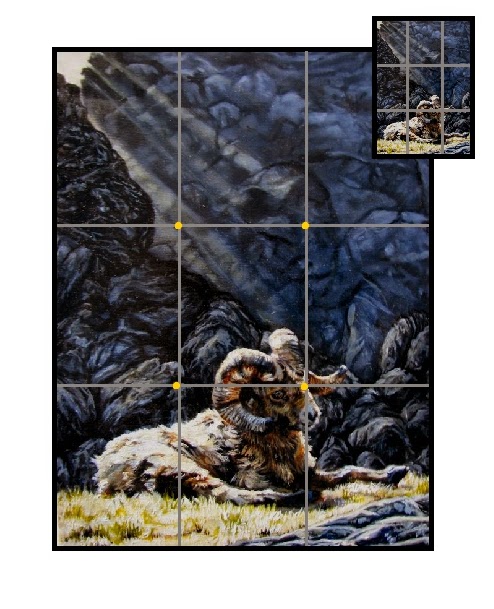
Grid system & the rule of thirds
Angles and lines of objects in the foreground and background lead the eye around the image. You can use them to focus on the features of your painting or to take them on a tour around it.

If you are working from references you will probably want to accurately transfer your idea onto your painting surface. You can do this by sketching the design using diluted paint, pencil or charcoal. If you use pencil or charcoal you will want to seal the drawing with a thin layer of acrylic paint or gesso to prevent the drawing from muddying your paint.

You can increase your sketch's accuracy by using a grid system to break down your reference and canvas into smaller chunks to transfer. Another option is to project your reference onto the canvas.

If it is likely or possible the painting will be later framed you will want to move the image inwards away from the edge of the painting area a little as the frame will crop the image space.


  • Painting Tips
Angle of painting 
Avoid painting on a horizontal surface such as a tabletop as this will likely skew the image's proportions based on your angle of viewing. This is why easels are useful tools to hold paintings.

Fat over lean painting 
It is important to paint fat over lean in oil painting to prevent the paint surface from cracking whilst drying. What this means is that if you are painting using layers to build up paint on the canvas each subseqent layer needs to have a higher fat or oil content than the last. This can be done through diluting early layers with solvent and adding oils such as linseed to later layers.

Good things come to those who wait
Paint layers will vary in how long they take to dry based on added mediums and thickness of application. Expect relatively thin layers of paint with no medium to take a couple of days to dry. This will also vary based on the surface you are painting on. Be careful not to overwork a wet painting as this will likely end up muddying your colours and dilute your highlights and shadows. Wait for the layer to dry before starting the next.

Paint what only what you see..  
..not what you think should be there. Putting details that you think should be visible but aren't actually visible from your references can actually take something away from your painting and make your image seem 'unreal'.

Lighting
Be aware of the temperature of light and complimentary colours. A warm orange sunset casts blueish shadows for example. Also pay attention to the direction of light and shadows, their depth and length and make sure they match.

Define your foreground
By softening your backgrounds you bring foreground objects forwards. Usually distant objects/landscape appear lighter than foreground objects as well as less detailed to the eye

The Mirror Trick
Something I call 'Painting Blindness'' occurs when you've been looking at a painting for a long time. This means problems within the image such as distorted proportions, and contrast can become difficult to notice. An easy way to double-check your image is to get a 'fresh look' at it using a mirror or to upload a photo of the painting and flip it horizontally using an image-editing program. That way you can see if there are mistakes you need to fix. Always carry out when you think your painting is done so you can make final touches as necessary.


Well I hope that helps. I'm not an expert but I've been using oils for about 10 years now so this is what I have managed to pick up. I personally don't believe art information is the privilege of the few to keep secret or dole out at a learner's cost. Indeed i think it's a shame that so much information remains unsaid in art institutions. I hope this provides a useful resource so a beginner can get started and enjoy what oil painters do!


Thursday, 4 December 2014

International Cheetah Day

So today, December 4th, I discovered that it's International Cheetah Day. I became especially fond of these graceful big cats from when BBC's Big Cat Diary was on our TV screens as a kid. So I thought I'd use this opportunity to talk about this fantastic animal and bring some awareness to its current plight as it is a species listed as vulnerable to extinction.

The Cheetah (Acinonyx jubatus) is the fastest living thing on Earth and can reach speeds up to 70mph, that's the speed limit on our motorways! They are wonderfully adapted for speed and an evolutionary arms race to be faster and faster between them and their prey has shaped their form. They are the only cat with non-retractable claws for increased grip and their long tail acts like a rudder helping them to turn. Their barrel-shaped chest and enlarged nasal passages, lungs, and heart help them take in as much oxygen as possible to fuel them in the chase.

Chases are extremely exhausting and cause body temperatures to spike so cheetahs may need up to an hour to get their energy back. During which time they are vulnerable to having their kill stolen. As cheetahs are made for speed not strength they are very vulnerable to other predators such as lions, hyenas, leopards, and others. Predation is biggest problems that cheetah cubs face along with a susceptability to illness though the species low genetic diversity. 90% of cheetah cubs don't survive the first three months. 

Painting of Toto from Big Cat Diary - he sadly didn't make it

Cheetahs are not true big cats as they lack a bone meaning they are unable to roar, but they can purr. This was something I heard very loudly when bottlefeeding a pair of cheetah cubs when I was out volunteering at Moholoholo Rehabilitation Centre in South Africa some years ago.


They have tawny fur with simple black spots and distinctive 'tear tracks' running from eye to mouth, They are largely solitary although males may form coalitions of 2-3 to hold territories against other males. They are diurnal predators relying on sight and speed, as such they prefer large open areas of grassland in which to hunt their prey. 


Cheetahs used to be a lot more numerous than the estimated 12,400 or so in the wild now and ranged heavily into Asia. In ancient times they were used as hunting companions and were kept as pets by royalty including Egyptian Pharaohs. Indian Emperors, and the likes of Genghis Khan. Now there are only an estimated 40-70 cheetahs left in Asia, in Iran and are threatened by the rise in road-use and mining traffic in the only areas they remain. 

One of the biggest problems is the lack of genetic diversity in cheetahs meaning their fertility rates are very low. This is due to a population bottleneck around 1000 years ago which lead to the population becoming extremely inbred. So much so that during skin grafting operations there was a failure to reject the new tissue as foreign, something that occurs in most animals. In fact the stripy and blotchy King Cheetah fur-patterning, although beautiful, is a sign of even lower genetic diversity present in cheetahs.

However this cannot be held entirely responsible for the fall in cheetah populations as this has occurred more recently in the last 100 years or so as farmland has encroached on cheetah habitat. This has led to competition with people for their wild prey. Livestock predation is a concern but cheetahs prefer wild prey when available. So it is important to educate people about this. Whilst I was in Africa the pair of male cubs that I helped bottlefeed were being hand-raised so they could be brought to schools and meet other people. This was to help educate children about cheetahs and hopefully help to protect them in future.

So help bring awareness if you can, be it on twitter or Facebook let people know about International Cheetah Day, and donate if you are able. Cheetahs are so unique and play an important role as predators in the ecosystem. I think it would be such a tragedy if we were to lose them.


Find out more here:

International Cheetah Day

Cheetah Conservation Fund

Friday, 28 November 2014

A Day in the Life of a Countryside Volunteer

I squint at my alarm clock.

6:37am.

Only a few minutes before the thing starts shrieking at me to get up. May as well get up now.

I plod downstairs glaring at the overly bright hall light waiting to greet me that dazzles me as I pass and make myself a cup of tea. I pack my things, ready my wet weather gear (wisely distrusting the Met Office's predictions for the day), and bid farewell to the dogs as I head into town to our vehicle pick-up point.

Thus begins my rather sleepy start to a day as a countryside volunteer.

Getting into town early I have time to buy a sandwich for lunch. I always feel rather awkward walking around town in my conservation getup. Layered up for outdoor winter work I bear a striking resemblance to the Michelin man. This is topped off with waterproofs and work boots that have seen better days with a patina of rips, burn-holes, and ingrained mud.

I look homeless. I think if I sat in the subway I could earn either small change or abuse; perhaps both. Some days I feel half-tempted to try it out as an experiment.

There's some time before we are collected to head to our place of work for the day and my inner-hobo instincts lure me to a park bench where I sit and read a book or magazine until it's time to gather. From where I sit I can see the river than runs through one end of town. It's swollen and tawny from the recent rains and I wonder whether if we'll see flooding again this year. Other volunteers slowly emerge from town and we chat as we wait for the landrover to arrive.

Our group is popular so some volunteers turn up in their cars - necessary to accommodate all our number. The work vehicle arrives and we head off in a small convoy to a nearby farm to work on a hedgerow that runs along one of the fields.

The sky is heavy with rain and the ground sodden with each step causing water to well-up to the surface. We set about building a fire but it's going to take awhile to get going in these conditions. Luckily we have Simon who's an excellent fire-starter.

Our task is to coppice the hedgerow running along the field's edge. All hedgerow plants want to become big trees so eventually hedegrows become gappy at their bases. Coppicing is an ancient method of woodland management and is useful when hedgerow trees get a little too big to be managed by trimming or hedgelaying. By cutting the trees down in winter it allows for the collection of wood whilst leaving the buds below the cutting height to respond by putting up new stems. This leads to a flush of dense vegetation growth the following seasons.

These trees had been cut before and each one is a labyrinth of stems contorted over one another so it can be a bit muddle. Brian remarks that he enjoys solving the puzzle of where to begin.

We cut every third tree using a combination of loppers, bowsaws and handsaws. They are then cut down to ground by Andrew who's wielding a chainsaw. By chance mine is tiny and at morning tea break I cheekily tell Jenny and Angie that I've already finished mine when they've been working on theirs' since last week. Tea breaks are getting more luxurious in our group with an increasing selection of biscuits and home made cakes. Tasty and energising food to fuel our labours!

Cuttings from the hedgerow are divided between long twiggy branches to be bundled and thicker straight branches suitable to be used for stakes. These will be taken to be used for  our summer river work. The rest fuels the warming fires.

We stop for lunch and a chat. The muddy field means our group is divided between islands of dry seating in a muddy sea. Angie and I sit on our tarpaulin raft and talk about whether it's cold enough to start making soups yet.

I find a cache of hazelnut shells amongst one of the stumps. The chiselling on the inside edge of the hole tells me that it is probably belongs to a woodmouse from last year who had been eating them. 


Hedgerows are important for wildlife such as woodmice and birds including protected species such as dormice so maintaining hedgerows is important in connecting up habitat as well as being a standalone habitat in itself. It's a shame that so many hedgerows I see in my local area are in a poor neglected state or have been completely replaced by fencing.

We strap our bundles of branches onto the roof and trailer, effectively camouflaging our vehicle as a large bush and drive back into town to be dropped off. I'm tired with soggy feet and covered in thin film of mud, algae and sawdust. But despite that seeing the hidden places we get to visit, chatting and joking with the group, and carrying our work that's going to help our wildlife -  it's always worth it!